
The pursuit of energy conservation and emission reduction in today's society has been driving the innovation of battery technology, especially in production technology. And lithium batteries, due to their excellent performance, are widely used in electronic products consumption, motor vehicles and energy markets. The innovation of its production technology is particularly important.
The production process of lithium batteries is typical. ldquo; roll-to-roll& rdquo; The process involves two processing steps. mdash; & mdash; From the film to a single battery, and then to the assembly of individual batteries into a battery system. A typical lithium battery consists of three layers of films. mdash; & mdash; Anode membrane, isolation membrane and cathode membrane, as shown in the figure below.
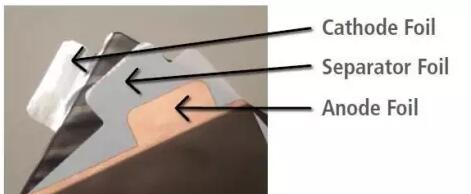
The thickness of the electrode coating is usually 100 μm, while the isolation film is 50 μm. The anode film is a copper film coated with graphite, the cathode film is an aluminum film coated with lithium metal oxide, and the isolation film is composed of polypropylene and polyethylene. Lithium battery production process:
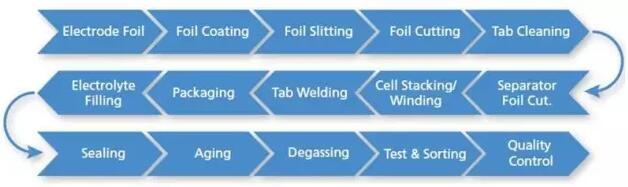
Due to the high requirements for accuracy, controllability and the quality of processing machines, the processes such as metal foil slitting, metal foil cutting, tab cleaning and separator foil cutting are more suitable for laser processing. Compared with traditional mechanical processing, laser processing has advantages such as no tool wear, flexible cutting shapes, edge quality control, higher accuracy and lower operating costs.
foil slitting
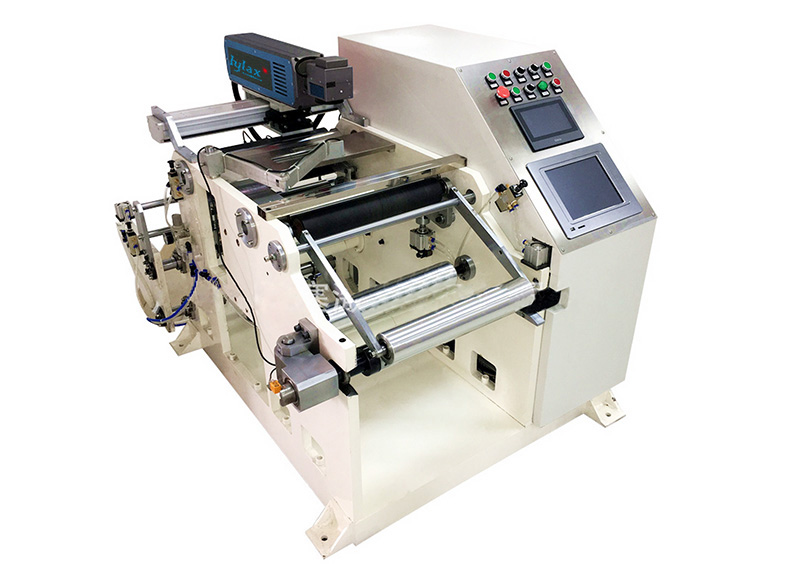
The metal foil cutting process refers to the division of a single roll of metal foil along its long edge into thin strips according to the design of the battery. The infrared pulse laser is suitable for this process and can cut the electrode coating at high speed and with high quality. If more precise requirements are needed for the cutting width and quality, pulse green light and ultraviolet light can also be considered.
foil cutting
The metal foil cutting process refers to the act of cutting the elongated anode and cathode membranes into the desired shapes based on the design of the battery. Depending on the battery design and whether the metal foil roll is fully coated, either the coating can be cut or only the metal foil can be cut. The laser used in this process is the same as that in the aluminum foil splitting process.
tab cleaning
In certain circumstances, graphite and lithium metal oxides need to be removed to expose the bare copper or aluminum foil labels. The key to this step is to remove the coating material without damaging the underlying metal foil. Pulsed infrared laser is the most suitable for this process.
separator foil cutting
Similar to the cutting of aluminum foil, the covering film also needs to be cut into the required shape according to the battery design. Since the isolation film is composed of organic compounds, pulsed ultraviolet laser is the most suitable choice.